Blogs

Stories, Advice, and Inspiration for the Curious Mind

Monolith vs Microservices: Choosing the Right Architecture for Your Project

Monolith vs Microservices: Choosing the Right Architecture for Your Project

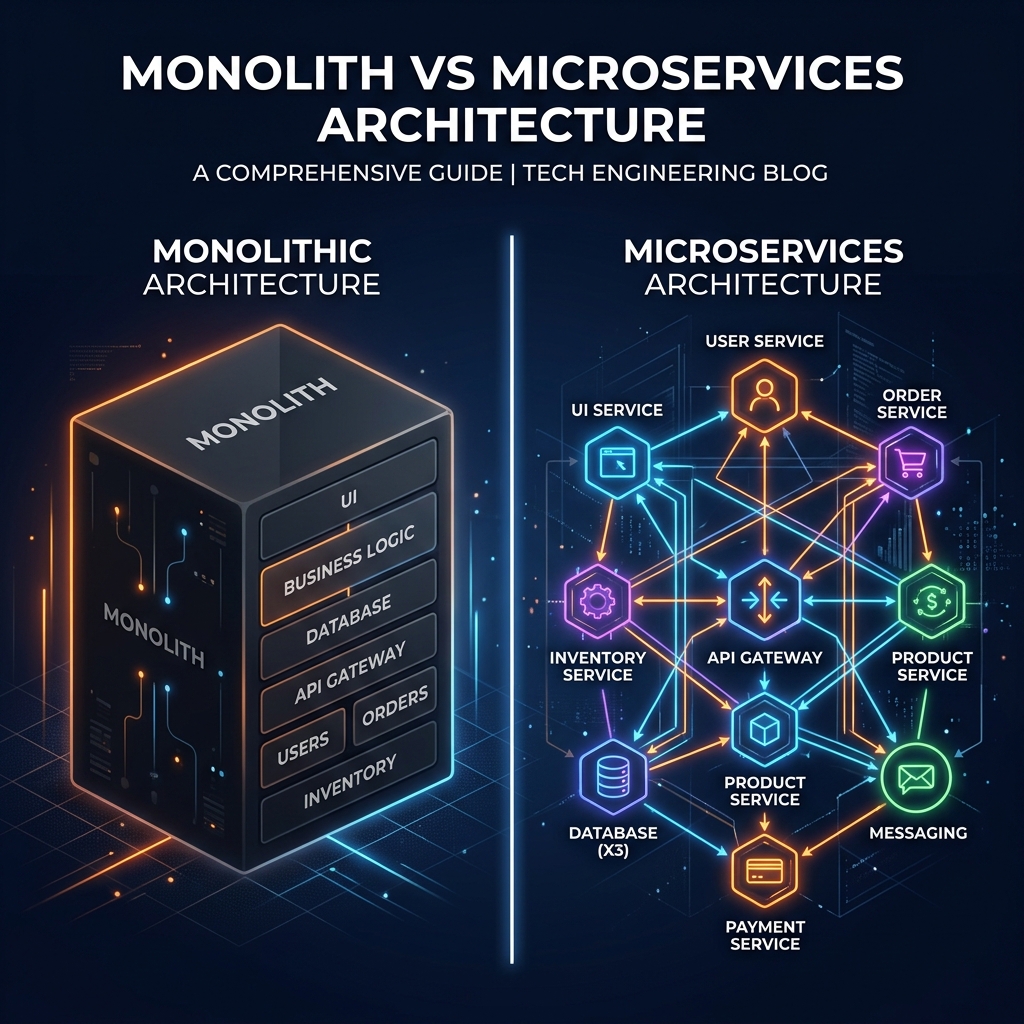
The debate between monolithic and microservices architecture is one of the most consequential decisions an engineering team can make. A monolith is simpler to develop, test, and deploy at the start — but as teams grow, coupling becomes painful. Microservices offer independent deployability and fault isolation, but introduce distributed system complexity, network latency, and operational overhead. The right answer is almost always: start as a monolith, and extract services when pain becomes real. Premature microservices are a tax on a team that hasn't yet found product-market fit.
API Gateway: The Traffic Controller of Your Backend

API Gateway: The Traffic Controller of Your Backend

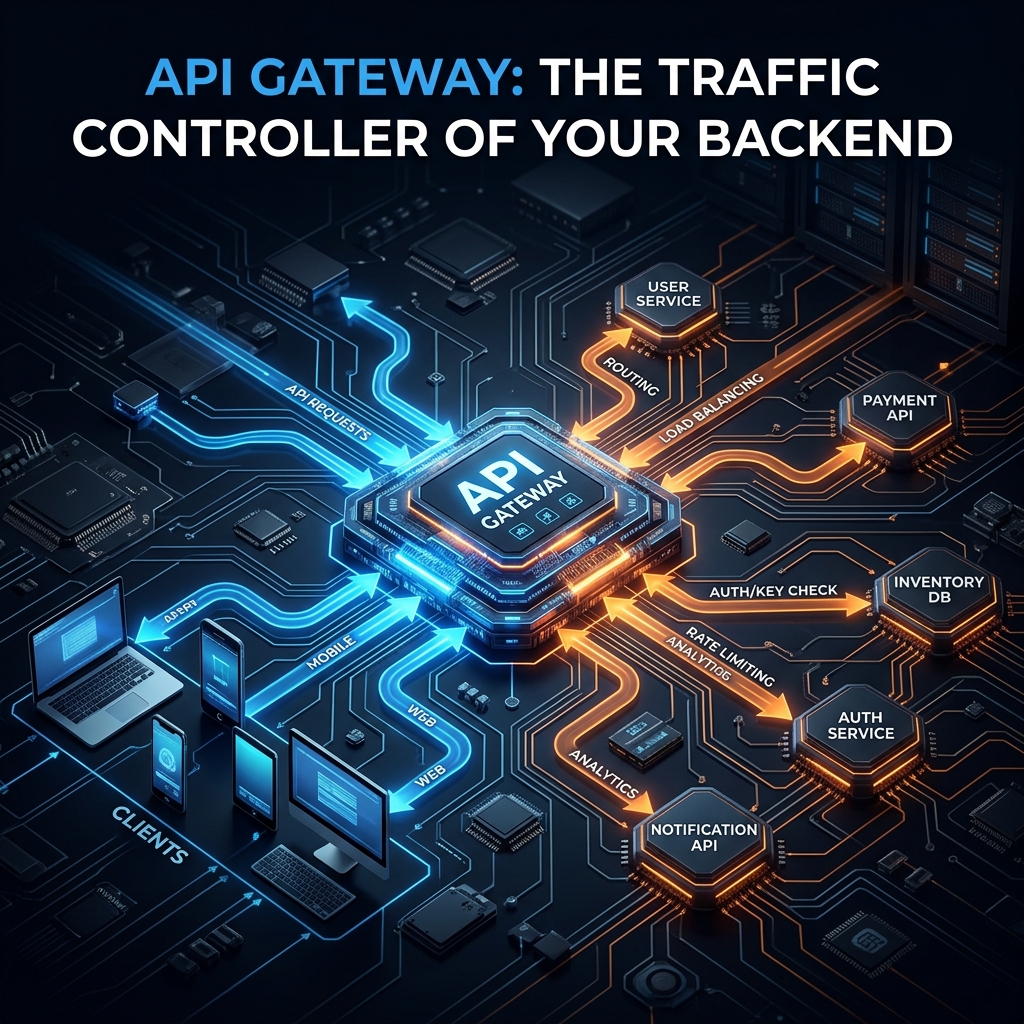
An API Gateway is the single entry point for all client requests in a distributed system. It handles authentication, rate limiting, request routing, load balancing, SSL termination, response caching, and API versioning — so your individual services don't have to. Without a gateway, every microservice must implement its own auth layer, which leads to inconsistency and duplication. Key examples include Kong, AWS API Gateway, Nginx, Traefik, and Envoy. A well-configured gateway is the difference between a fragile and a resilient production backend.

State Management in React: From useState to Zustand

State Management in React: From useState to Zustand

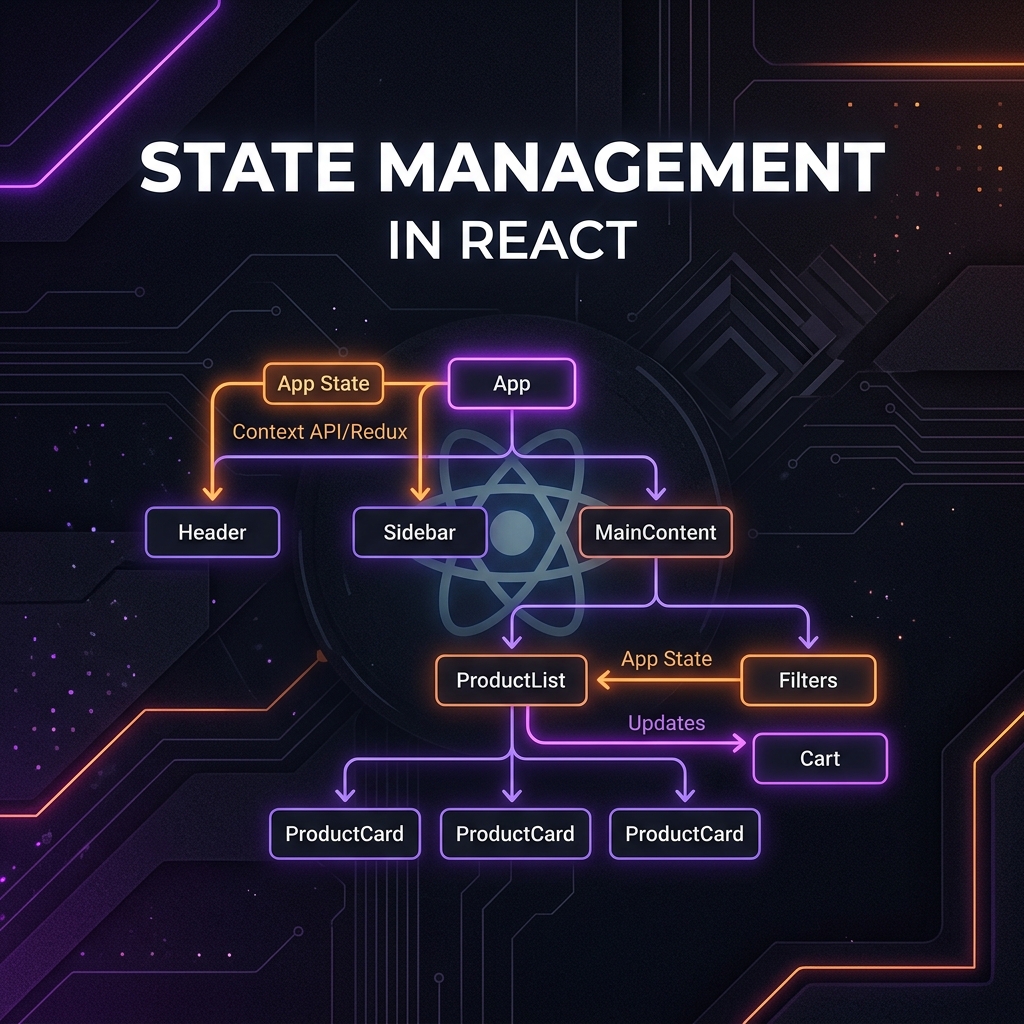
React's state management landscape has evolved dramatically. useState is perfect for simple local state. useReducer adds structure for complex local logic. Context API solves prop-drilling for shared state but causes unnecessary re-renders at scale. Redux was the industry standard for years, but its boilerplate cost is high. Zustand offers a minimal, hook-based global store with virtually zero boilerplate and excellent TypeScript support — making it the go-to choice for most modern React applications that need shared state without over-engineering. Choose your tool based on actual complexity, not anticipation of it.

Why Early Redis Adoption Is Not Always the Right Architectural Decision

Why Early Redis Adoption Is Not Always the Right Architectural Decision

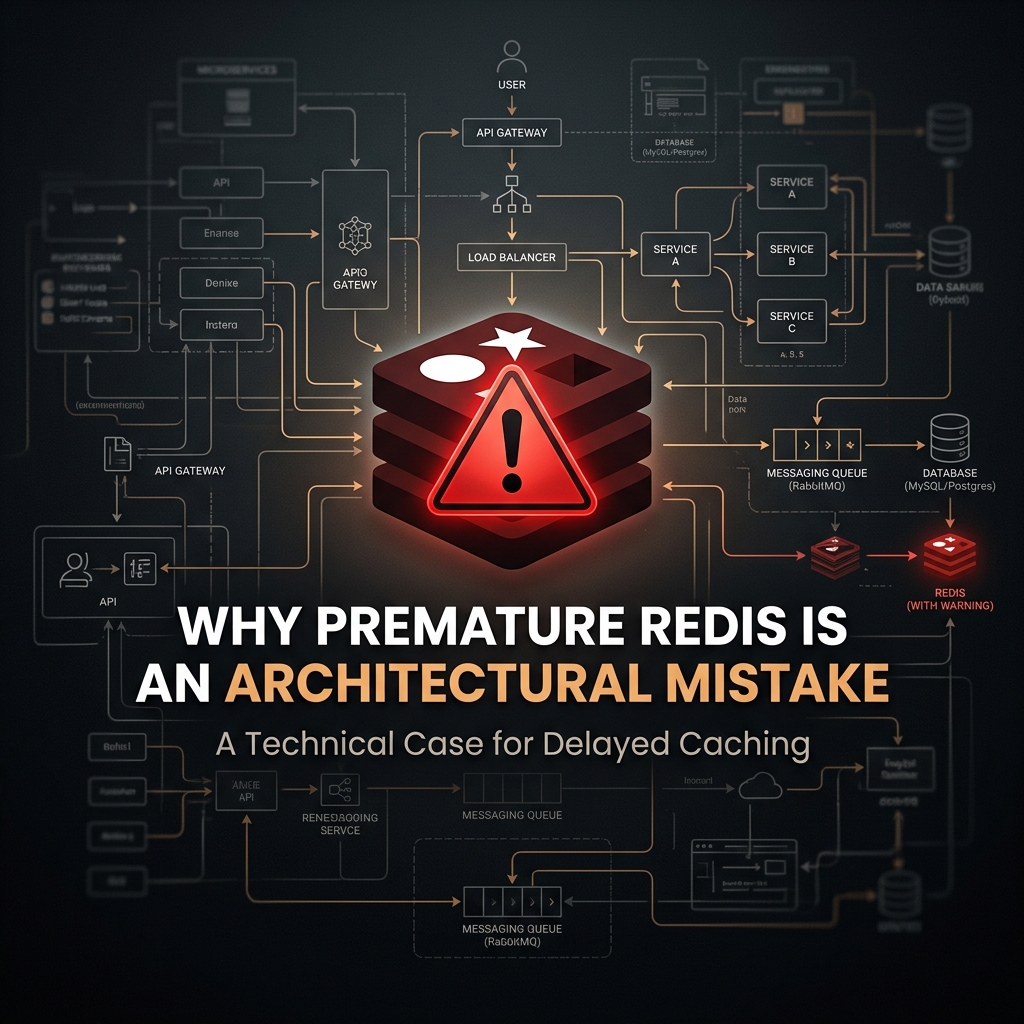
Redis is a powerful in-memory data store — but reaching for it before you understand your system's bottlenecks is a costly architectural mistake. Before you cache, you must profile. Adding Redis prematurely introduces cache invalidation complexity, consistency risks, infrastructure costs, and operational overhead for a system that may not even need it. Start with well-indexed PostgreSQL queries and connection pooling (PgBouncer). Only when you can demonstrate through metrics that repeated expensive queries are your performance bottleneck should you introduce Redis. Architecture decisions should be driven by evidence, not anxiety.

Why I Choose Go for High-Performance Backend Services

Why I Choose Go for High-Performance Backend Services

Go was designed at Google to solve real-world engineering problems: fast compilation, simple concurrency via goroutines, small memory footprint, and excellent standard library. Unlike Node.js, Go is truly concurrent (not event-loop-based), making it ideal for high-throughput APIs, background workers, and microservices that need predictable latency. Its static typing catches bugs at compile time. Its binary deployment model — a single compiled executable — makes containerisation trivial. In my EHR and GCX platforms I use Golang for REST microservices precisely because it handles thousands of concurrent connections efficiently with minimal resource usage.

5 Critical Pentesting Techniques You Must Know in the AI Era

5 Critical Pentesting Techniques You Must Know in the AI Era

Security testing in 2025 looks different. Here are five techniques every serious engineer should understand: (1) Prompt Injection Attacks — manipulating LLM-powered applications by injecting malicious instructions into user inputs that override system prompts. (2) AI Model Inversion — extracting sensitive training data from ML models via carefully crafted queries. (3) Adversarial Input Testing — feeding AI-powered security tools specially crafted inputs that cause them to misclassify malware as safe. (4) API Fuzzing with AI generation — using LLMs to auto-generate edge-case payloads for API endpoint fuzzing at scale. (5) Supply Chain & Dependency Poisoning — targeting AI-generated code that blindly installs unverified packages.

Design Systems Worth Knowing as a Developer in 2025

Design Systems Worth Knowing as a Developer in 2025

A design system is more than a component library — it's a shared language between design and engineering. Here are systems worth studying: (1) Material Design 3 (Google) — comprehensive tokens, motion specs, and accessible components. (2) Ant Design — enterprise-grade React components with a deep ecosystem. (3) Radix UI + shadcn/ui — unstyled, accessible primitives with developer-controlled styling, now the go-to for Next.js projects. (4) Chakra UI — great developer experience with sensible defaults. (5) Apple Human Interface Guidelines — if you build for iOS or macOS. Understanding a design system's philosophy — not just its components — makes you a significantly better engineer and collaborator.